Monday, 27 May 2013

The keyhole garden bed

One of the wonderful things about Permaculture is that it encourages to think about different shapes and layouts than just the rectangular shape so prominent in todays' world.

A keyhole garden bed is a garden bed that has a keyhole type area that allows working in a circle or semi circle and therefore reaching a larger surface area from one point than when working in a normal garden row. We have designed several keyhole garden beds and I have just finished planting the first plants into it. There is an onion circle (hardly to be seen in the photo below), a bean circle which is the visible by the holes. Around those there is a semi circle of tomatoes.

Since reaching past the tomatoes will be hard or impossible at a later stage, this is the outer most circle to be worked from the keyhole. The outside, planted with lettuce (left) and fava beans (top) can be reached from the paths. 

I also have a side to the right of the picture, which is harder to reach, as the grass typically grows long and high and I don't mow that side. Therefore I planted squash and it will run into the grass and hopefully suppress it a little. In any case I will only need to access it later in the fall. 

Since I like stuffing as much as possible into a bed, I planted some lovage in the free corners and placed a calendula on top of the tomatoes. The calendula will not only make the bed look pretty, but will also help keep nematodes at bay, although I am not sure whether this is required in this case. Nearly every hole I punched into the ground revealed a predatory insect that will help the soils ecosystems to stay in balance.  

Keyholes can be put beside each other to make a whole row of beds. The look can also be very appealing (in our opinion anyway). We use them often in garden designs that are close to the house where space is limited. They also make fantastic herb beds right outside your kitchen entry, for that quick dash to spice up your dinner with that little bit of cilantro or and extra load of basil. 

Sunday, 26 May 2013

Shooting for a dream

 Every great dream begins with a dreamer. Always remember, you have the strength, the patience, and the passion to reach for the stars to change the world. 

-Harriet Tubman

Go confidentally in the direction of your dreams. Live the life you have imagined.

-Henry David Thoreau

 The voyage on the Permaculture ship is often, if not always, a very indivdual and personal one. I believe that anyone, whether they have just dabbled in the subject, taken a full course, or live the life as a whole, has done so because of a motivation that comes from deep within themselves. Maybe it isn't always apparent at the time, but when one looks and asks oneself 'Why am I doing this?' the answer will be different for each person.

I have always regarded nature as the most important, the most interesting, fascinating, beautiful and precious 'thing' in the world.

It makes me angry and sad to see the daily destruction of it. I work as a chemist. I drive my car to work, I work for clients that cause huge devastation on the land, whether it would be oil companies which work in the tar sands of Alberta, or logging companies that clear cut the forests with no regard for the destruction of the surrounding ecosystems.

Therefore I have decided to do something about it. There is a real risk of failing in this endeavour and yes, it frightens me somewhat, but I have always been of the opinion that I rather die standing, than live kneeling down.

We have just incorporated a company that will focus on several different aspects in sustainable living with an emphasis on Permaculture. For one we want to teach ways of modern sustainable living to others and spread information about how we can maybe turn this ship that is heading for the cliffs around. On the other hand we want to set an example on how our current practices are not the most efficient and find better ways to manage our precious resources. We want to restore a recently clear cut area into a examplary food forest and agroforestry system that will demonstrate that a sustainable agroforestry is economically viable and feasible.

After a long search for an appropriate property we finally have found a place that we will try to purchase. It is 50 acres of clear cut land which consists of multiple different zones from wetland to hillside. It is absolutely devastating to see what has been done to this land for a couple of bucks, but the practice is common in the Maritimes region and sights like this are unfortunately more the norm than rarity. Initially when we first had a look at the property, the logging crews were still working, but most of the land had been cut. Some lonely old trees were still standing, which by the look of them were to knarly and bent to be of any value to the loggers.

When we had another look, even those trees were cut, the bottom 6-8 ft section taken and the rest left to rot. My heart felt like it was being squeezed, knowing that these trees which were nearing 100 years in age have been chopped for a section of wood, that when everything is said and done might make a profit of $10-$15.

Unneccesarily felled

There might have been 8ft of usable wood in this tree.


There might be some activism that can be done to stop this practice, but I don't think that it will help as long as there is even $1 to be made.

Instead, we will reforest the land with a productive forest system, that will provide income, food, warmth and shelter for many people on an ongoing basis. This is supposed to be a demonstration in how we can change the forestry sector to something sustainable and more useful that what we currently are doing with it.

We can't do this on our own, however. We will need help. There are many avenues we will explore whether it is crowdfunding, giving workshops, and later selling the products from the forest to finance more and more reforestation.

I dream of every clear cut area in the world being turned into something that can provide for people in the long term. I know this will not be possible, but once we can show that there are more productive, sustainable and economic ways of resource forestry available to us then just the chop and saw alternative, we might initiate a shift in thinking.

If you have any ideas, skills, time, or anything else that might help this undertaking and you are willing to share them with us, please feel free to send us a message or comment on this post.

Saturday, 18 May 2013

The mysterious Kedron Balls

Hello friends! It is a long weekend and we are busy with getting the garden ready for planting in the next 2 weeks or so. I will post how everything looks and what we did soon, but for now I wanted to share something that isn't directly Permaculture related, but still makes me think about patterns and motion. 

A colleague of mine brought in a phenomenal little thing to work the other day. It is called a Kedron Ball. The Kedron lakes are two lakes in New Brunswick, consisting of Little and Big Kedron lake. I personally know Big Kedron lake well, as it is where friends and I go for our annual fishing outing. Little Kedron lake isn't far from there, but I have never been. 
It is Little Kedron that produces the Kedron balls. These balls are made off pine needles and other woodland debris that ends up in the water and sinks to the bottom. There, small whirls and currents swirl the debris and pack it together. The end result you can see in the photo below. 

Truely a phenomenal freak of nature brought on by motion and patterns in current. 

I am wondering whether anyone has ever seen anything like this anywhere else in the world. Little Kedron lake is the only lake in New Brunswick that I know off that produces these little mysterious balls. 


The mysterious Kedron ball

Friday, 17 May 2013

The end of the carbon era

Friends, terrible news, it looks like oil and other fossil fuels might be finite after all. Surprised?

Well I know that people who read this blog are probably not surprised by this. I certainly am not. It is something that I have been saying for years, and where I have met little differing opinions. We know that there is an end to oil. We know it, but we choose to ignore it. That is our right, as long as we know that there will be consequences to our attitude. So far so good.

Why am I writing this you might wonder. Well, for all of those who are not sure whether they should go on ignoring the fact or what to do about it I wanted to say a few things. And for the ones that already know about this I think there are some facts that you might have not though about and to give you some ammunition for the next debate you have with your oil crazy friend.

We have to look at our situation from an outside or rational perspective. I always find that this helps in order to make decisions. So let's look at a couple of things:

1) Is oil running out in my lifetime?

This is a contemptous point really. Most people choose to ignore the fact that we are runnning towards an energy crisis with high speed because they think it doesn't effect them or will not affect even their children. Because "there is so much oil left, we don't have to worry for another 100 years", right? Wrong! Even conservative estimates peg our oil reserves at maybe another 40 years. This is at the current rate of production and consumption. The truth is, that there is probably far less oil left than what is claimed. A short look at the reserves of the different countries will make this obvious. The reserve has maintained a constant level, despite production. Which is to say, that for every barrel of oil we have taken out of the ground another barrel was found. Sounds pretty fishy to me really. The second important factor to consider is the rising consumption. With countries like India and China enjoying the fruits of industrialistation and economic development, the need for oil in those countries is rising exponentially, eating away our reserves at an even faster pace than we calculated with. So 40 years is actually an optimistic number. The former vice presedint of Saudi Aramco said at the 'Oil and Money Conference' in October 2007: 

"[World] reserves are confused and in fact inflated. Many of the so-called reserves are in fact resources. They're not delineated, they're not accessible, they’re not available for production."

2) There are no signs that fossil fuels will ever end. All these prognosis are humbug, how do you know that it is finite

I have actually heard this argument and besides the knowledge of the origin of oil (which makes it finite) I have another hard fact that demonstrates that fossil resources are finite. Did you try to get a helium baloon lately? Maybe you should try. I think Disney has already stopped to sell helium balloons in their resorts. The reason is, there is hardly any of this precious gas left. I know this because I work as a chemist who uses Helium everyday as a carrier gas for our gas chromatographs. Well, we are in a pickle, because even as a lab we have problems getting helium to run our instruments. There is a huge push in the scientific (mostly the anlytical chemistry) community to switch from helium to hydrogen. Every big supplier is currently running seminars and advertising campaigns pushing hydrogen and hydrogen generators to facilitate a liberation of analytical labs from the helium trap. Helium is a by product of natural gas production. The grotesque thing about it is that it is actually one of the most abundant elements in the universe. We just have a problem keeping it here on earth. It simply dissipatees into space. Literally. 

3) They will come up with electric cars anyway once the oil is gone, so no reason to worry.

That might be true. Afterall there are already electric cars that have phenomenal performance and can cover up to 600km before needing recharging. But transport is only one of the things made possible by oil. Most people know that plastics are oil derived, so here we will be looking at another bottleneck if there were no more oil. Plastics penetrate every aspect of our lives. They are literally everywhere. To see just how dependant we are on plastics I urge people to watch "Addicted to platic" a pretty good documentary about plastic in our world. 

You can watch it here: http://www.youtube.com/watch?v=ffClNhwx0KU

I spoke of helium earlier. You might not care about helium balloons or even analytical chemistry processes because they don't directly concern your life (although I am pretty sure that the analytical chemistry part has interfaced with nearly every person in one way or another), but there are other things like MRI that rely on helium. MRI stands for Magnetic Resonance Imaging. A huge superconducting magnet is used to create a magnetic field which using the correct hardware can be used to make images of organs and muscle tissue. The superconducting magnets have to be cooled to 4.5 K (-425F or -269C roughly). Only helium can do this. There is no other gas that can be used as a substitute. So say bye bye to modern medicine. Because no helium = no MRI, no oil = no plastic for syringes, drips, sterile packaging etc and most pharmaceuticals are also produced from petroleum products. 

So what is the conclusion
 
Oil has literally penetrated our lives and we are totally and utterly addicted to it.

What to do? I really don't know. I have been trying to live without petroleum products and while I certainly reduced the usage of these products I am far from being petroleum free, and wouldn't even know how to do so. No more computers, internet, car, fancy clothes, plastics, electronic gadgets, how is a person to survive? Well survive is a strong word, but maybe live a modern life. 

I remember that there was a TV series in Ireland where families that were living a really decadent lifestyle were filmed for one day of their lives with no power. That means no cars, electricity or gas. I distinctly remember one family, where the teenage daughter didn't even leave her room for the day, because she couldn't have her hot shower, blow dry hair routine in the mornings and she didn't want to walk to the bus stop and 'be seen' taking the bus. 

I think we need to change our behaviour and attitude to modern life first. We need to understand that a world without excessive power is not only a theoretical inconvenience, but an imminent reality.  I am confident that we will find solutions. But we need to start looking....now!

Thursday, 16 May 2013

Restricted space

Where I am from originally, space is a commodity that not many people have the luxury to afford. While I initially grew up on a farm and later in a house with a nice garden and know how privileged I was, many people live in small apartments surrounded by concrete and houses. Some might have a small 10 sqft backyard or maybe a balcony, but a real garden that would invite planting and growing of food is not granted to everyone.

Being in such a situation might make some people feel that things like growing their own food is an impossibility. Here is the good news: It is not! Anyone can grow food or have some beautification of the otherwise dull surroundings right where they live. And anyone can grow plants. Anyone. No excuses. No 'green thumb' is needed. No talent for plants is necessary. And growing plants does not have to be a lot of work either. Especially growing plants in a small space is very little work. Imagine having a balcony with those hanging long boxes that normally house pansies you could have 9 ft of that on a small balcony and you could plant 3 ft with onions in two rows.

We are growing onion in an old roasting tray, there is room for an even dozen. 

That would not be enough for a winter larder, but it would be sufficient for several meals. But what do you think is going to be easier to take care of, those three feet in the box or the same amount outside in a garden? You don't have to bend down for the balcony boxes. They are right there. No grass will encroach on the space. No other plants will try to take over. Plant another 3 ft with lettuce (that would be about 5-6 heads and you can cut them instead of pulling them giving you twice the harvest) and another 3 ft you can plant in some beets or radishes or whatever else you like. In between the heads of lettuce you could plant some Nasturtium. Those plants will hang down over the box and therefore will stay out of the way of the lettuce. Now you made 3ft into 6ft effectively, because you stack your space. Stacking in space can be very effective. It can allow you to double, triple or even quadruple your available space and get a high yield from something that never looked like it could even produce one meal. 

While most of the plants shown here are 'just' horticultural,
this house demonstrates what can be done in a small space. 

Let's continue with a balcony as an example. How about a trellis on the side wall. You could grow some grapes or even kiwis. After the plants have grown to the top, trellis along the ceiling all the way to the other side. One or two pots of tomato plants can be placed on that side. Put in some basil around the tomato plants directly in the pot.  Hello bruschetta!

I even heard about people that use small aquariums to grow water chestnuts on balconies. Many possibilities are out there. Many things have been done before, but many more still have to be tried.

So this year there is no excuse not to grow some food. Even if it is just a supplementary amount food tastes better when you grow it yourself. Have fun!

Monday, 13 May 2013

Haskap

You might have heard about the 'new fruit on the block' called Haskap berry. Haskap berries (Lonicera caerulae) are not a new hybrid of any sort, but actually native to most of the northern hemisphere temperate climate zones.
Another name they are going by is Blueberried Honeysuckle. The antioxidant amount in these berries is said to be even greater than that of blueberries. We bought three bushes last year to see how they fare. While the two small bushes from one nursery took on great the large one from a different nursery had some problems. It started to wilt only a few weeks after transplant and lost all leaves pretty fast. The bush also got pummelled by a freak storm gust that came through last year and will probably be forever on the slanty side.

However I don't give up on any tree or bush before I see a second growing season or the lack thereof. Good thing, because this year the bush seems to be perfectly fine (apart from the slant...er..yeah).

Here are some pictures of the blossoms.

I am delighted to see how beautiful the blossoms are.

Forever slanted...but still vigorous yay. 
So I hope that the birds leave some of the fruits for me this year. They taste like a mix between a raspberry and a blueberry. Truly delicious. 

Friday, 10 May 2013

Blooming sugar maples

There were only three trees on our property when we bought it. One lonely apple tree and two majestic old sugar maples. I have no idea how old these maples are, but I am guessing about 100-120 years.

yesterday I took a walk with my camera through the garden and took some photos. The maples just started to put on their summer green and the buds had popped. When I took the photos I realised that these weren't the usual little young green leaves that we saw every year since we bought the house in 2010. This is the fourth spring we experience here and this is the first time I see the maples in FULL BLOOM!!!

Here are some photos. A little challenge for your morning tea break, see whether you can spot the bird in the last picture. 


The colours are slightly brighter than in the last years, when only leaves were produced.

The leaves are just about to show but the flowers are dangling and spreading their pollen. 

Some early bee was in the mood for a photo shoot. 

Spot the bird.....it's a Grackle

Thursday, 9 May 2013

Container planting

Anyone and everyone can have a garden nearly anywhere they live. Even a balcony or a sunny window shelf can provide enough space to produce some kind of edible stuff. At the very least, a little herb garden can be maintained and harvested throughout the year, even in a small apartment.

We are in transition right now and since we don't know when we will have to move or where we will end up, we have been trying to keep most of our plants mobile. We've planted in pots and buckets or barrels and recently, we've even made a small, detachable, living wall. We also wanted to see how much you can grow in the 'microspace" as Geoff Lawton puts it so nicely.

So we want to share with you how we went about this task and we will start with our living wall. This wall is for now attached  to the front of our greenhouse and will house herbs and maybe lettuce. I am not sure yet what and how much will get in there, but let's pack it to the maximum possible. This is the fun side of Permaculture in my mind. The tinkering and experimenting. A whole lot of happy little accidents and sad little failures.

The idea of a living wall (a vertical growing bed) came up because we had some old, odd shaped pallets in the yard that I have salvaged from my work place. We had bought a new instrument at work and, because I was very involved with the decision and purchase of the item, I felt a little attached and took home the pallet the thing was shipped on, as well as the huge cardboard box that it came in. (The cardboard box made a fantastic mulched bed you read about in an earlier post.)

Upcycling, oh yeah!


I closed the pallet off on the open side with some plywood and also closed the bottom so that the soil won't fall through. You cant tell here, but I left a little space which was mostly accidental, but also allows for drainage and prevents flooding of the soil.

Closing off (almost!) all the sides

The next step was to mount the box to the wall (in our case the greenhouse front). We screwed on a plank first, and then screwed the box to that for extra support. We didn't need many screws but made sure to pressure test it (i.e. my wife pushed and pulled on it to make sure that even with a heavy load of soil, water and plants it won't fall down).  


The smaller plant over the plastic is the support plank. 

All secure!


We then filled it with soil and compost mix...

Our amendments and the tub in front is our regular topsoil.

 Those little pots you see are about 90 heritage tomatoes and some melons and things. We'll tell you about the box and buckets in later posts...

And filling...
The tray underneath is to catch any soil that fell through (cos I'm cheap like that) but almost none did. 

And full...

and mulched on top.

And Done!.. Almost

 After the box was filled, I started to drill holes using a hole saw into the side of the box to allow for planting space on the vertical. 

Yep, no wasted space here!


Et voila! A detachable, living wall all ready for seeding/transplanting whatever we choose (provided it does well in a living wall format of course). This would be great for any kind of space where the sun hits and watering can be easily done. That means balconies, railings, or on the wall right beside the kitchen door/window. It's easy access, easily moveable and apparently easy to fill to bursting. We're going to continue this series on container planting and in the process keep you updated on the progress of our new living wall. 

As always if you want to comment use the box below and if you have your own living wall(s) we'd love to hear from you. Happy gardening!

Wednesday, 8 May 2013

What's happening....

So we haven't posted in a while and I am ashamed to admit it. It has been really busy here and things are starting to speed up. With all the planting and seeding and bed making, client designs and implementations and other life commitments it has been hard to keep up with all the tasks.

This is why I thought it would be a good thing to let you know what has been happening and how our Permaculture life is shaping up.

We have been looking for land to start our Permaculture education center and have been around a lot (driven over 2500km last month!!! OUCH!) to find a suitable spot. So far we have our eye on an 80 acre piece of land which has been recently clear cut. This land has everything that we could hope for. It has springs, a south west facing slope, and even a wetland with a small creek connecting to a larger lake. Some of the trees that survived the onslought of heavy cutting equipment are nice mature hardwoods mixed with some truly majestic pine trees.

At this stage in the game it is a matter of financing, and you might find a crowd funding appeal here shortly. Depending on donations we will offer the donors free courses once the curriculum commences.

Meanwhile we are incorporating a company to shoulder the legal site of the education centre. This involved a lot of lawyer talk and big words and in the end again a lot of money. It also came along with a decent amount of stress. Which we normally try to avoid like the plague. It is a killer.

Once all of these bumps are straightened out, and we have more details to share we will do so immediately. So please bear with us.

On the other hand we have been doing a lot of planting in our greenhouse and space is becoming an issue. This fact, as well as the fact that our house is for sale and we might have to leave it before harvest season prompted us to concentrate on container planting and high density growing of vegetables. Expect the first post here within the next 24hrs. I promise.

Wednesday, 1 May 2013

Propagation of cuttings aka Food Forest on the cheap


Trees and shrubs can be expensive. Nobody has thousands of dollars to spend on fruit trees and berry bushes....well not many people anyway. So how can we get many, many trees and bushes for little money. Here is a way: take cuttings and propagate the trees yourself.


Cuttings

All you need is some already existing plants, or a friend that has some interesting trees and bushes, or an easily accessible orchard somewhere (Please ask before taking cuttings from anywhere that isn't yours. Generally people don't mind a few branches cut off their trees, but don't assume). Take your cuttings. The cuttings should be nice, vibrant, new shoots in most cases. With some hardwood species it is better to take the growth from last year which are already hardened out a bit. Those take longer to root but make a stronger new sapling.


Root starter

You can buy root starter solution or powder in any garden center and sometimes in box stores such as Canadian Tire or Home Depot. You can also make your own if you have access to a willow tree. Willows contain a large amount of auxins, the hormones that make plants grow roots.

Take some cuttings from the willow tree. The branches should be around 1cm or 0.5 inch thick. Tenderise (ie smash) the branches with a clean hammer and cut them into 1 inch long pieces. You don't have to tenderise the branches, but it aids the extraction of the hormone when the cells are a little bit battered.

Pieces of willow branches after soaking in hot water

For every cup of branch pieces, boil up 2 cups of water. Put your willow pieces into a container with a lid and pour the boiling water over it. Close the lid and punch a small hole into it to let the steam escape. Then let the brew stand overnight and cool down.

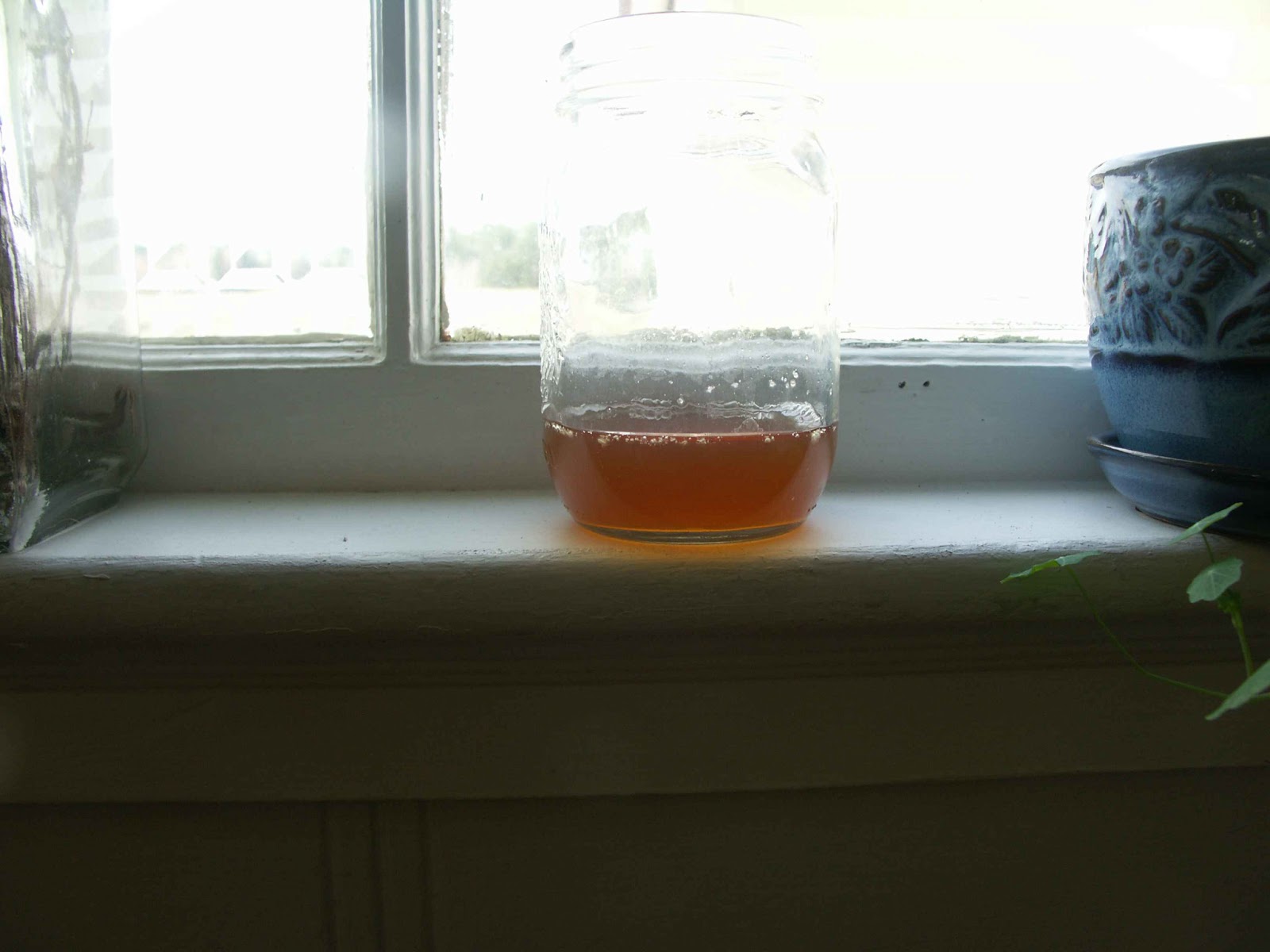
The next day simply filter off the liquid, which should be a dark brown colour at this stage, into a bottle and your organic root starter is done.
Finished root starter solution. The smell is strong, but not unpleasant.

Starting the cuttings

There are different ways out there to start the cuttings. Some people just apply some of the powder or liquid to the little nodes at the bottom of a cutting and immediately plant the cutting into some potting soil and perlite mix. Some people put the cutting out into the soil directly.

We soaked our cuttings by standing them into the rooting solution for 24hrs then planted them into a potting soil bag. Simply punch some holes into the bag and stick your cutting in. This saves work and room. You can put a lot of cutting into one bag. Possibly as much as 60 or more.
Preparing the planting bag

The roots will take some time to develop. This can take anywhere from a couple of weeks to several months. Hardwood species will take longer and I have heard of cuttings starting to root after 9 months. Patience is the key here, we are talking about trees after all. So pick where you're putting your little nursery wisely, you don't want to put it where it'll be a nuisance.
The finished bags. We have a lot more room in each bag but we ran out of cuttings.

After the roots develop, you can dig a hole and plant your tree et voila! You've started your food forest and all it cost you was some potting soil, some rooting mixture and some time. Go on, give it a go.

Thursday, 25 April 2013

Flamethrowers and First Steps

"Sometimes, it's better to light a flamethrower than to curse the darkness." Sir Terry Pratchett, Men at Arms.

"The greatest journey begins with a single step." Buddhist proverb.

No, I'm not endorsing the idea of sparking up a flamethrower and advancing on your favourite target of wrath. Really I'm not, those things are heavy. What I mean is, it's better to take action than talk and no matter how big the job or long the journey, it'll never be complete unless you start. 

Take a look at this video, it's about 14 mins long so it's a good accompaniment to your coffee. This is an incredible teacher who saw an opportunity to help his kids and took it, and the knock-on affects of this man's actions have been huge. Enjoy.

As you can see in the video, it is possible to create change through your actions and examples. It is possible to positively affect enough people to make a difference. Learn to grow your own food and teach others to do the same. Convince your landlord, your principal, your local politician to see the economic benefits of fitting buildings with water catchment systems and green roofs. Look into starting or extending local CSA's and LETS. Spend what money you can in shops owned and operated in your community. Sit around the kitchen table with your neighbours and decide the most beautiful way to provide fresh, healthy food for all of your children.

Permaculture isn't about hiring lots of expensive machinery or using jargon that only club members can understand. It's about using the resources you have to fix the problems you face. Stephen Ritz managed it and I'll bet he hadn't a clue about Permaculture when he started. He saw an opportunity to make lives better and he took it. Be inspired. Take that first step and enjoy the ride. 

And like he says, don't forget to stop and smell the flowers along the way.

Wednesday, 24 April 2013

Super-Size Me!


In 1933, the economies of the world were in a shambles. Many factors are believed to be involved, but the cause is not what this post is about. Nor is it about the cause of the current depression that is still dragging on today. It's partly about what the US did to try and stem the tide back then but mostly, it's about what options we now have to take those lessons and go much further.

In a nutshell, US President Roosevelt managed to create a federal agency called the Public Works Administration (PWA) in his first term in 1935 whose mandate was to set up large scale public works through private contractors to employ scores of people and put them to work building infrastructure throughout the entire country. Hospitals, schools, hydro-electric dams, highways, railways etc. etc., nearly 8 million people were employed from 1933 to 1943 (wiki links here and here). Yes, the administration could have been done better and yes, I do agree that certain projects should have changed location (e.g. Mount Rushmore, I'm sure that certain First Nations peoples would much rather not have four American presidents in their sacred mountain), but you cannot argue with the math.

Between 1935 and 1943, nearly 8 million people were employed by the PWA. It is estimated that for every person employed in the PWA, almost 2 were employed indirectly. That means the total number of people actually supported by these projects was closer to 16 million. That is a hell of an investment into the security of a population. And that's just the paycheques.

The projects undertaken by the PWA were such that they brought the greatest benefit to the larger populous and not just the families on the payroll. The electrification of rural America, 70% of the schools built at the time and every town got a park because of these projects. The hospitals, the highways, the massive earthworks that were set up all across the southern states to protect the remaining soil from further wind erosion. How many lives did the public works make better? How many were saved?  
 
We are at a point now where that kind of stimulus is desperately needed. For more reasons than they were necessary in 1935. For this time, food production is much higher on the priority list. The "Green Revolution" eradicated independent, local food networks in many places around the world, i.e., in the 30's they mostly grew food, now we mostly don't.  Luckily enough, applying Permaculture Principles to the issue makes all of the problems fall into place as solutions. I'll take you through it.
 
The problems facing, well, the whole world actually can be boiled down to:

Food
I don't think I need to bore you by continuing for very long on this one. It's a fact that the food production system pushed by the Western Powers and the IMF is broken. Did you ever see the tension go on a driveshaft while being operated? That kind of broken, where flailing, solid metal bars smash into everything around it, filling the air with shrapnel and screams.   
 
It doesn't have to be that way. It really doesn't. Incorporating food production into projects that are going to happen anyway is not hard. Moving tons of earth into soil retention mounds like the WPA did in the 30's? Then treat them like swales and plant food forests in the troughs. Trees and plants will move in there anyway so why not choose the kinds you want for maximum benefit? If done thoughtfully and with a view to gaining the absolute maximum yield for your investment, you can create food production sites, wildlife habitats, water harvesting/cleansing systems, a solid base for local economy, significant and highly relevant up-skilling of the local community and workforce AND the original purpose of soil retention mounds and paycheques. And all of the added extras come by making the natural processes work for you. It's really not difficult once you start looking.

Water
 
The necessity to use natural processes in our favour is clearer nowhere else like it is for the water cycle. The alternative is inoperable, even today we are failing at making a human system do as good a job as the natural systems.
The water cycle is largely based on there being trees in an area. Water evaporates from the leaves of trees and forms clouds far easier than it does from the surface of large water bodies, and of course this fact is very handy for areas that don't have large water bodies nearby. This also means, no trees = no rain, a phenomenon that is already measurable in many parts of the world.
Luckily enough, the above point about using massive swales to plant food forests will incorporate trees to a large degree. So really, you are not just growing food, you're growing rain too. Rain that will fall on nearby places and re-invigorate fields, rivers and lakes. So again, by considering the overall system, additional benefits can be achieved with very little extra effort and the investment returns keep growing.

Living Conditions
 
I'll put this bluntly: If you asked them, the majority of people who are living in cities today would leave for the country if they had the real viable chance of being able to make a decent life for themselves. Cities are swelling because less and less people can make a living on the soil. It is not a choice if your alternative is starvation.
 
However, designing projects that will serve to return the land to abundance through water catchment, soil remediation and intensive reforestation will not only give people the opportunity to work in the initial stages. Once the projects are completed, the land would still require a certain level of care from trained inhabitants. So really, these projects could easily be designed to not only address the short-term needs of kick-starting local and national economies, but to also be the foundation for much longer term solutions to the problems facing all of us.

Health of Population
 
With unhealthy food and crowded living conditions, its no wonder that the rates of chronic diseases has climbed even while the rate of acute disease has fallen. These chronic diseases can be largely attributed to two factors; diet and stress.
The diet, already dealt with above. Permaculture + public works = abundance of healthy food produced at local levels.
 
Stress, well what are people stressed about? Food and shelter are the main ones right? It's often completely out of someones control whether they can or can't survive into next month because they don't control their paycheques or food source or where they live. You can't possibly stay healthy in those circumstances, the stress will kill you in the end.

Giving people back a sense of security through giving them control over their food supply, giving them the opportunity to be in control of their income, or making solid, affordable homes available through programmes promoting food production, entrepreneurship and off-grid, natural building all based on Permaculture principles can give people that chance to feel secure in their lives. Erasing insecurity and giving people a chance to breath causes stress levels to drop significantly.
 
Good food + good homes + minimised stress = a far healthier and robust population. And THAT means decreasing the burden on public and private healthcare systems by reducing the incidences of preventable, chronic, diseases. Which reduces the burden on the taxpayer and on government resources. Everybody wins!
 
As far as I can see it, Permaculture does not make empty boasts when it states that the problems of the world are solvable when looked at properly. A lot of time, money and human effort has been spent trying to treat the symptoms of our false economy instead of taking a long, clear look at what's causing the symptoms. Would you hand a drowning man a towel or haul him bodily out of the water?
 
Why are we treating our world any different?

Tuesday, 23 April 2013

Lazy garden beds in under 1 hour

So this is something we decided to try out this year. With all the looking around for a new property and trying to sell our current house, time has been a limiting factor.

Since we want to sell our property and realising that most people probably will look at the garden and think...."there is no lawn. I wonder where the kids are supposed to play,", (despite the fact that a 3D landscape is much better for kids than a 2D lawn dominated landscape) we are reluctant to put a lot of work or money into the garden.

We came across Geoff Lawton's way of making sheet mulch beds. Simply score the ground, cover with cardboard and/or paper and then mulch heavy, heavy, heavy.

We decided to try this out and I must say, it is very quick to put together a bed. I timed myself and if I wouldn't have had to cut my own mulch in the process I would have gotten a 10'x10' bed done in less than 45 min. 

All I did was this:
I scored the ground using my rake. I will say at this point that my ground is extremely loose. I tilled it last year and made a point of not stepping on everything but stuck to my little paths. So even now I can dig comfortably with my hands into the ground and take out that crumbly goodness.

Pic 1; A corner of the bed, see the crumbles?

Then, with all the grass and weeds still in place I used thick cardboard to lay out the shape of my bed (in this case a rectangle, but any shape is possible).
I used thick cardboard and tried not to include anything with glossy print on the outside. Make sure the cardboard interlocks and overlaps, so that every space is filled and no weeds can find their way through.


Pic 2: Cardboard layer, make sure there are no gaps!

Then I used bulrushes (or straw) to mulch VERY thickly on top. I didn't even go half as much as needed but I still had about 10 inch thick mulch on top of the cardboard at the end.

Pic 3: Thick layer of mulch on top
 
After all this was done I used the garden hose and watered for a good long time. Water, water, water. When you think it is enough do another 2-3 min.

AND YOU'RE DONE! Yay, a new garden bed.

Pic 4: The new bed

When it comes to planting time, simply make a hole in the mulch and punch through the cardboard using a small hand tool, maybe a small shovel or even a bulb planter. Put your seedling into the hole with a small bit of compost and arrange the mulch around it to shelter it from the wind. Then  watch them grow. 
I made keyhole garden beds so that I don't have to step onto the bed to reach the plants in the middle. It is very important to not compress the ground. Don't step on it, don't kneel on it. This way you don't have to till it the next year, or the year after.

Less work, more fun. Let us know how you get on in the comment box.

Sunday, 21 April 2013

The tyrant is back....yay!

The tyrant is back....finally I would like to add. With the tyrant I speak of is of course Tyrannus tyrannus, the Eastern Kingbird. 

The Eastern Kingbird is a fly catcher and if you read my post about the wildlife around our pond (here), you know what the little fellow does around here. 

I have noticed that same behaviour of the bird diving into the water. Although the splashes so far are more timid than I remember them.

This time however I managed to take a (slightly blurred) photo of the action. 
If you take a good look you can see the bird in the tree in the center of the picture


And here is the diving just after it hit the water.


 Here is a close up

Dapping the feet?

So I wonder whether the bird does this for a cleaning purpose, or whether he is true to his name and tyrannises the tadpoles and young frogs that have just started their mating calls.

If anyone knows I would like to hear about it.


Monday, 8 April 2013

The search for Eden

Yes folks, this title sounds like something we would normally reject. But in this case (as usual) we are focusing again on more earthly realities, than divine salvation or other dubious lost histories. The reality of this world has already pushed wildlife and nature to the brink of existence by displacing them from their natural habitat. In our opinion, the same thing is happening to us humans. We are not made to live in a concrete jungle that is lit up 24 hours of the day by yellow sodium lighting and Neon signs. At least the two of us are not.

So we decided that we will try to find a place where we can push nature into the opposite direction and try to build a system that is of ludicrous abundance. A Garden of Eden, so to speak,  for ourselves and the animals around us.

Since we currently live in beautiful New Brunswick and have lived through several winters here, we had the fantastic opportunity to observe life in one of the most extreme regions where proper gardening is still possible. There are quite a number of "Cold Temperate Region" gardening books out there. What sucks about them is, that when you get all excited, leaf through it and then find references to Northumberland, England as examples of "Cold Temperate". Well, what on Earth do you call New Brunswick then, where on March 31st the ground is still frozen solid an inch under the mud line, if the ground is clear of snow at all. No offence meant to the English country men and women, but New Brunswick is just a little further down the scale.

So in other words, there's a far shorter growing season (last frost date for us here is Full Moon in June, first is Full Moon September, no lie), mostly due to the ground needing to thaw out. Also, maybe to counter this, the summers are hot, hot, hot. The sun gets pretty powerful and the plants do suffer under it. There are also few specific learning resources available other than David Jacke's work (Edible Forest Gardens) and specialized Maritime gardening books , but since the majority of these consist of the "add fertilizer, pesticide and lawn seed" school of thinking, they're also pretty useless for our purposes. 

The opportunities of this climate have made a few truths very clear;
The main one being: Self sufficiency is EXTREMELY hard to achieve. Greenhouse, cold frames, trees, and livestock without them, you're going to be struggling. The purpose of the greenhouse and cold frames should be fairly obvious, the season is just too short to seed everything out. Perrennials will cut down on the work and are more guarantueed to throw off some yield. Without the livestock your food storage might last until December, or maybe even into January, but then you are still looking at 5 month before the next bit of edible stuff comes your way.

In light of this we have realised that we should rather be going with nature then against it and given in. We decided to move south (not by much, but still a little) to wonderful Nova Scotia.

We have been involved in Permaculture for a while now and feel that this way of living will at least part of the answer to surviving climate change and an increasingly more devastated world. We want to share our knowledge and experience  but also put our money where our mouth is and show that this type of living is not only possible, but also of much better quality than what is standard in the so called modern world.

We therefore want to start a Permaculture and sustainable living education center, starting with the purchase of the land this year.
Our plan is to start small by holding and hosting workshops while we start building the first parts of the infrastructure like the main house built from natural materials or the initial garden parts. Later then we will add accomodations for guests and 'students' and hopefully host full length Permaculture Design and other multiple day long courses. 

After long deliberation and brainstorming we decided that the property should be at least 10 acres in size but preferrably bigger (when it comes to land more is always better. The quality of land can always be changed, the size can't.) The cheaper the better of course. The plan is to have the land paid off completely within the next year before we start building on it. Fiscal security is a must and no debt is the best security.

This blog will inform you of what is happening and how we get along. Feel free to share any experiences with us here on the blog. If you want to take part during any stage of this 'experiment' please let us know and we will see how you can help and what we can give you in return.

Monday, 1 April 2013

Indoor sheet mulch

Something we tried out in the fall last year (2012) was to incorporate a sheet mulch bed into our greenhouse. This bed is contained in a large box (5' x 2.5' x 3') which is then covered with old windows that hinge up acting as a coldframe within the greenhouse.

We first put in some leftover firebricks and larger stones we had removed from parts of our outside beds during the spring. There were two thoughts in my head that I hoped to achieve with the bricks. Most of them were put down at the sun facing side of the box to collect heat and act as some form of thermal mass. So far it seemed to have worked, the bottom of the box on the inside is consistently 2-3 degrees warmer over night than the middle. The other thing I hoped to achieve is a small air gap or pathways for air to flow through to aid decomposition.   I will have to see later this year how that went.

Old bricks add thermal mass and allow for air flow

So now the box is ready to start the actual sheet mulch process.

For the sheet mulch (which I also like to call compost cake) we layered several different materials into the box starting with wood and branches. We even threw in some whole pieces of firewood that started to have fungi growing on them to provide long term nutrients. So in effect, the bottom of the sheet mulch bed is like a Hugelkultur bed. 

Sticks and stones

The next layer consisted out of woody plants with some green material on them. Most of that was alder branches that I cut back the day before. Alders are nitrogen fixers and their leafs and stalks introduce more nitrogen into the bed than other shrubs or tree material.
Lots of Goldenrod (Solidago canadensis)

The next layer was comprised out of plant matter like Goldenrod and other weeds that we had pulled from the garden and areas where they needed to be cut. We also added yarrow which is a very good accelorator for the decomposition process.

The next layer was grass clippings, topped with some topsoil, topped off with more grass clippings. We have a wild meadow that we bushhog once a year in fall. We then gathered up as much of this cut grass we could and used it for sheet mulching. Quite a good bit went into the box in the greenhouse. As you can see, there is no such thing as too much mulch. 
At this point, it might be important to add that grass cuttings and other weeds are not to be left out of a compost or sheet mulch bed for fear of spreading the weeds. A good-going compost heap will reach temperatures that will kill most of the seeds and in a sheet mulch bed the top mulch will smother most weeds. So it is better to include the weeds and with them their nutrients.

Grass - Soil - Grass layer

The next layer on top of all the grass was a thick layer of newspapers. We tried to leave the papers and flyers together and folded so the the layer is about 1/4 to 1/2 an inch thick. Then we watered. A lot of water to soak everything. The box is not sealed so that water and air can flow out and in respectively. As you can see, the water makes a nice way out and soaked the floor in our greenhouse. But what fun is it when you can't make a mess?

No such thing as too much mulch


...and then some paper....

.... a lot of paper...


A watering mess....yay!

On top of the soaked newspaper we mulched heavily using bulrushes from our swampy parts of the property. We found that bulrushes make excellent mulch and we don't even chop the rushes up. Of course you can do that and it might make for a neater look of the bed, but I didn't have much time or the appropriate tools to chop the plants.  Bulrushes are used to waterlogged soil and no rushes will germinate in your bed if it is not waterlogged.

Job's done!!!

After all this is done, all you have to do is wait for spring, so far the theory. I will let you know how the growing season will work out.